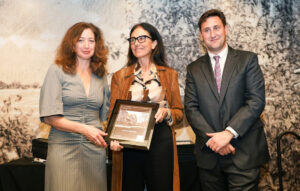
As part of the interior design workshop at the IUAV University of Venice, Treviso-based Glip delivered a keynote lecture focusing on Human Centric Lighting. Through a detailed analysis of complex case studies and advanced technical simulations, the event strengthened a strategic partnership between the company and the Venetian university. Glip’s CEO, Alessandro Piovesan, said: “We have combined high-level university education with industrial research in the field of modern lighting technology”.
Light is not merely a functional element for illuminating a space, but constitutes an essential component of architecture capable of shaping the perception of environments and directly influencing people’s physical and mental wellbeing.
This is the fundamental concept that emerged during the lecture held in Lecture Theatre 2.2 of Warehouse 6 at the IUAV University of Venice, entitled ‘Light that transforms spaces: the intangible element of architecture’. The event featured senior executives from Glip, a Treviso-based company specialising in bespoke lighting solutions: CEO Alessandro Piovesan, managing partner Rohan Sottana and senior architect Tatiana Sambo.
The lecture formed part of the ‘Indoor Environmental Quality’ module within the Interior Design workshops of the degree programme in Product, Visual Communication and Interior Design, led by lecturers Ilaria Pittana and Francesca Cappelletti (Indoor Environmental Quality), and Silvia Codato and Alessandra Bosco (Interior Design). The initiative demonstrates the strong academic and industrial collaboration between the Venetian university and the company based in Quinto di Treviso.
“Entering the lecture theatres of the IUAV University of Venice represents a valuable opportunity to combine high-level university education with industrial research of excellence in the field of modern lighting technology,” explains Alessandro Piovesan, CEO of Glip. “Today, designing lighting is no longer just about calculating technical specifications, but about understanding the biological and emotional impact that every single space has on people. Through Human Centric Lighting, we bring our bespoke expertise to young designers, demonstrating how dynamic LED technology and digital simulation can tangibly improve physical and mental wellbeing in everyday environments, from schools to major museums, as we work together to build a sustainable future for our cities.”
During the lecture, the topic of Human Centric Lighting (HCL) was explored in depth. The speakers explained how natural light is the main factor regulating the circadian rhythm – that is, the internal biological clock that governs the sleep-wake cycle, hormone production and cognitive functions. Thanks to dynamic LED systems, it is now possible to adjust light intensity and colour temperature throughout the day, providing cool light in the morning and warm tones in the evening.
Particular attention was paid to the lighting design process, which requires a careful initial analysis of architectural drawings, style and natural lighting conditions. Digital tools such as DIALux evo software allow for the precise simulation of light distribution across surfaces and verification of compliance with regulatory parameters, integrating technical data with photorealistic renderings capable of showcasing the final atmosphere prior to construction.
To support this theory, Glip presented several high-profile case studies where lighting played a decisive role. These included the project carried out for the Gallerie dell’Accademia in Venice in collaboration with architect Tobia Scarpa, for which the bespoke ‘Lama’ luminaire was developed, designed to enhance the artistic value of the paintings without compromising their conservation. The presentation also highlighted the work carried out at the Arca di Noè nursery school, which focused on the children’s visual comfort through DALI control, and the refurbishment of the former Configliachi Institute in Padua, which has been transformed into a neighbourhood cultural centre.